
Effects of Glycerol on Pellet Mill Production Efficiency
Crude glycerol is a by-product of the biofuels industry, which has the potential to be used as a feed ingredient in animal diets. However, little is known about glycerol's nutritional value or how it impacts feed quality and feed processing efficiency. Three experiments were conducted to evaluate the effects of glycerol on production efficiency of a pellet mill. In all three experiments, diets were manufactured, pelleted, and data collected at the KSU Grain Science Feed Mill. All diets were steam conditioned to 85ºF and pelleted at 150ºF using a CPM pellet mill equipped with a 4 mm x 32 mm pellet die.
In Exp. 1, the six treatments were a corn-soybean meal-based swine grower diet formulated to contain 0, 3, 6, 9, 12, and 15% crude glycerol. Experiment 2 included seven treatments: the control with no added soy oil or glycerol, the control diet with 3 or 6% added soy oil, the control diet with 3 or 6% added glycerol, and the control with 6 or 12% of a 50:50 soy oil to glycerol blend. Experiment 3 included five treatments: a control with no added lactose or glycerol, the control diet with 3.6 or 7.2% lactose, or the control with 3.6 or 7.2% glycerol. Each experimental diet was replicated by manufacturing a new batch of feed three times. Glycerol lowered delta temperature, amperage, and motor load in Exp. 1, 2, and 3. The addition of glycerol consistently improved pellet quality.
Production rate was not affected by the addition of glycerol; however, glycerol decreased total energy usage (KWh/t). Furthermore, glycerol can be added to a diet in combination with soy oil in a blend to improve production efficiency and pellet quality compared to a diet containing only soy oil. The addition of glycerol will improve the production efficiency of pelleting, pellet quality, and decrease energy cost when included in diets prior to pelleting.
Introduction
The Renewable Fuel Standards Program, which is part of the Energy Policy Act of 2005, mandates that a minimum level of renewable fuels be consumed in the United States each year. In 2006, the minimum biofuels consumption level was set at four billion gallons with expectations of doubling by 2012. Consequently, there has and will continue to be an unprecedented level of growth in the biofuels industries. Biodiesel is the renewable alternative to petroleum-based diesel fuel. It consists of monoalkyl esters formed through an alcohol-based catalyzed reaction of triglycerides in oils and fats. According to the National Biodiesel Board, there are currently 105 biodiesel production facilities operating in the United States and 77 facilities are in the planning or construction stage. If all of these facilities are realized, the estimated U.S. biodiesel production capacity will exceed 2.5 billon gallons. This level of production will yield nearly 1.3 million tons of glycerol, the primary co-product of the biodiesel production process. Glycerol constitutes approximately 10 to 11% of a typical triglyceride. Purification of crude glycerol to a chemically pure substance results in a valuable industrial chemical. However, it is costly and the glycerol market is already saturated, thus the price of glycerol continues to decline. This trend will continue as more and more biodiesel production facilities come online. Consequently, there has been much interest in utilizing crude glycerol as a feed ingredient in animal diets to reduce diet costs. However, little is known about glycerol�s nutritional value or how it impacts feed quality and feed processing efficiency. Therefore, the objective of these trials was to evaluate the effects of glycerol on pelleting production efficiency.
Materials and Methods
In all three experiments, diets were manufactured, pelleted, and data collected at the KSU Grain Science Feed Mill. All diets were steam conditioned to 85�F and pelleted at 150�F using a CPM pellet mill (Master Model HD, Series 2000) equipped with a 4 mm � 32 mm pellet die. In all three experiments, each diet was replicated by manufacturing a new batch of feed three times. Pellet mill electrical consumption, production rate, hot-pellet temperature, motor load, feeder rate, conditioning rate, and pellet durability were measured.
Experiment 1 included six treatments that were corn-soybean meal-based swine grower diets formulated to contain 0, 3, 6, 9, 12, and 15% crude glycerol (Table 1).
Table 1. Composition of Diets, Exp. 1 (as-fed basis)
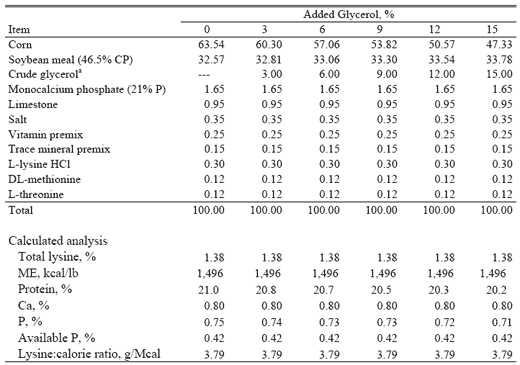
a Contained 90.7% glycerin and 136 ppm methanol.
Experiment 2 included seven treatments: the control with no added soy oil or glycerol, the control diet with 3 or 6% added soy oil, the control diet with 3 or 6% added glycerol, and the control with 6 or 12% of a 50:50 soy oil to glycerol blend (Table 2). All diets were formulated to the same lysine to metabolizable energy ratio. The metabolizable energy value used for glycerol was 1,555 kcal/lb.
Table 2. Composition Diets, Exp. 2 (as-fed basis)
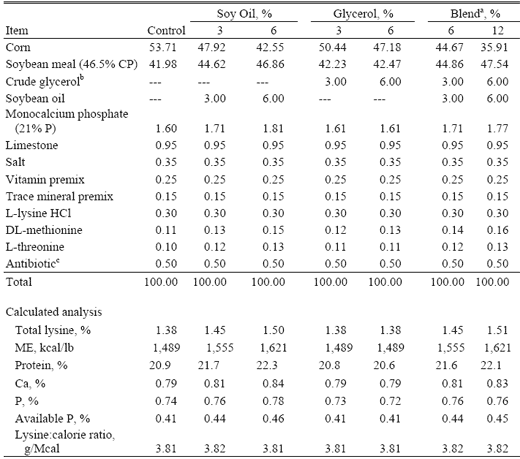
a Contained a 50:50 blend of soy oil to crude glycerol.
b Contained 90.7 % glycerin and 136 ppm methanol.
c Provided 140 g of Neomycin sulfate and 140 g Oxytetracycline HCl per ton of complete feed.
Experiment 3 included five treatments: a control with no added lactose or glycerol, the control diet with 3.6 or 7.2% lactose, or the control with 3.6 or 7.2% glycerol (Table 3).
Table 3. Composition Diets, Exp. 3 (as-fed basis)
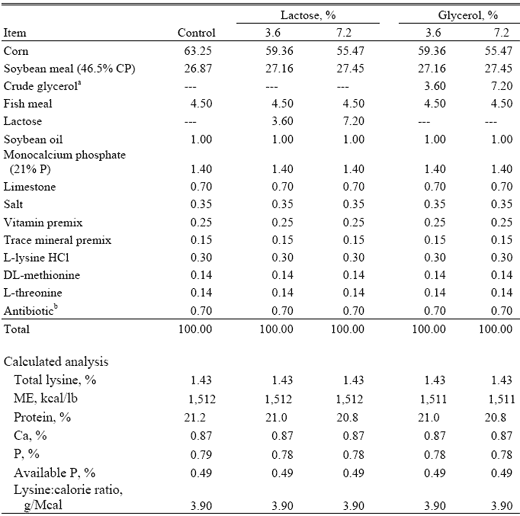
a Provided 90.7% glycerin and 136 ppm methanol.
b Provided 140 g of Neomycin sulfate and 140 g Oxytetracycline HCl per ton of complete feed.
Results and Discussion
Experiment 1. There was no difference (P>0.11) in conditioning temperature, indicating that all diets were indeed pelleted at 150ºF (Table 4). Hot pellet temperature initially decreased (quadratic; P<0.05) through 6% added glycerol, increased at 9% added glycerol, and again decreased through 15% added glycerol. Delta temperature also decreased (quadratic; P<0.01) though 6% added glycerol, increased at 9% added glycerol, and again decreased through 15% added glycerol. Delta temperature should follow a similar pattern to hot pellet temperature as delta temperature is calculated using both hot pellet temperature and conditioning temperature. There was no difference (P>0.46) in voltage (volts) with increasing added glycerol. Amperage (Amps) decreased (quadratic; P<0.01) with the addition of glycerol. The greatest decreases occurred with the addition of 3% glycerol and again at the 12% glycerol additions; however, all diets with glycerol had lower amps than the control. Motor load was also decreased (quadratic; P<0.01) with the addition of glycerol. Similar to amps, motor load decreased the greatest with the initial addition of 3% glycerol and again from 9 to 12% glycerol addition. Voltage, amps, and motor load are measures of energy. Amperage and motor load values follow similar trends. Amperage measures the electrical current pulled from the pellet mill, and motor load energy needed to rotate the pellet die. Motor load will increase with increased friction in the die and decrease as friction is decreased. The decrease in motor load when glycerol is added to the diet indicates a decrease in pellet die friction. Pellet quality was also improved (P<0.01) with the addition of glycerol. Pellet durability index (PDI) increased (linear; P<0.01) through 15% added glycerol for both the standard and modified PDI. The addition of glycerol had no effect (P>0.14) on production rate (t/h). The kWh/t production rate decreased (quadratic; P<0.01) with the addition of glycerol; it increased at 9%, and decreased again through 15% glycerol addition. The response exhibited at the 9% added glycerol treatment doesn't follow the trend for all other glycerol levels. This spike at the 9% added glycerol treatment is not completely understood. The 9% diet caused problems when attempting to pellet the diet at higher conditioning temperatures. It continually overloaded the pellet mill at approximately 168ºF. This phenomenon warrants further investigation of a potential interaction with added glycerol and conditioning temperature.
Table 4. Effects of Added Glycerol on Production Efficiency, Exp 1ab
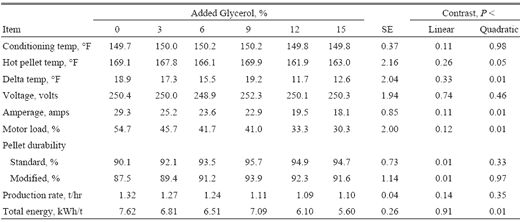
a All diets were corn-soybean meal-based swine grower diets.
b Each experimental diet was replicated by manufacturing a new batch of feed three times.
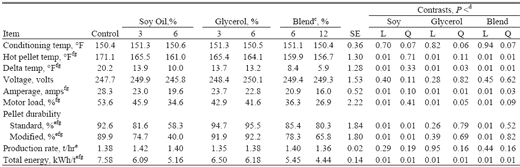
Experiment 2. Similar to Exp. 1, a conditioning temperature of 150ºF was targeted. There was a tendency (P<0.08) for the 3% soy oil, 3% glycerol, and the 6% blend treatments to have a higher conditioning temperature of 151ºF compared to all other treatments at 150ºF (Table 5). Although statistically significant, this small difference is of little practical importance. Hot pellet temperature and delta temperature were decreased (linear; P<0.01) with the addition of soy oil, glycerol, and their blend. Hot pellet temperature and delta temperature decreased (P<0.01) when soy oil, glycerol, or the blend was added to the diet when compared to the control. Hot pellet temperature and delta temperature was also decreased (P<0.01) for the soy oil/glycerol blend when compared to soy oil and glycerol additions. There was no difference (P>0.10) between hot pellet temperature and delta temperature between soy oil and glycerol additions. There was no difference (P>0.11) in voltage between any of the treatments.
Table 5. Effects of Added Glycerol on Production Efficiency, Exp 2ab
a All diets were formulated to the same lysine to metabolizable energy ratio.
b Each experimental diet was replicated by manufacturing a new batch of feed three times; each run consisted of 750 lb batches.
c Addition of 50% soy oil and 50% glycerol.
d Linear (L) and quadratic contrasts (Q).
e Contrast soy oil vs. glycerol, P<0.01.
f Contrast soy oil vs. blend, P<0.01.
g Contrast glycerol vs. blend, P<0.01.
Amperage and motor load decreased (linear; P<0.01) with the addition of soy oil, glycerol, and their blend. The addition of 3 and 6% glycerol decreased (quadratic, P<0.05) amps and motor load; the greatest decrease occurred with the initial addition of glycerol to the diet.
The addition of the soy oil/glycerol blend had the greatest decrease in motor load, and amps (quadratic; P<0.03), with the12% blend addition decreasing amps and motor load the greatest. The addition of soy oil, glycerol, and soy oil/glycerol blend all decreased (P<0.01) amps and motor load compared to the control. The addition of soy oil and glycerol resulted in increased (P<0.01) amps and motor load compared to the blend. The soy oil/glycerol blend had the lowest amps and motor load compared to all other treatments, indicating the largest reduction in pellet die friction.
Pellet quality was not affected (P>0.26) with the addition of glycerol; however, the 6% added glycerol had the greatest standard and modified PDI compared to all other treatments. The addition of soy oil decreased (quadratic; P<0.01) PDI. The blend of soy oil and glycerol decreased (linear; P<0.01) PDI but the overall PDI of the blend was greater (P<0.01) than the PDI of soybean oil alone. The overall PDI was greater (P<0.01) for glycerol when compared to the soy oil/glycerol blend and soy oil treatments. Soy oil had a slightly increased (P>0.01) production rate compared to glycerol. Production rate (t/h) was not different (P>0.10) between glycerol and the soy oil/glycerol blend or the control. The soy oil/glycerol blend was not different (P>0.10) from any of the other treatments. The kWh/t production rate decreased (quadratic; P<0.01) with the addition of soy oil, glycerol, and the soy oil/glycerol blend. The greatest benefit occurred with the initial addition of any of the liquid sources.
All treatment means were different (P<0.01), with the control having the highest kWh/h and the soy oil/glycerol blend having the lowest. Glycerol had a slightly higher mean than the soy oil, but it was intermediate to the control and soy oil/glycerol blend.
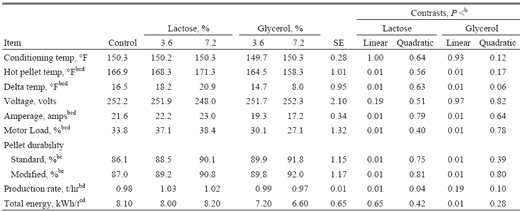
Experiment 3. There was no difference (P>0.12) in conditioning temperature among treatments: all treatments were pelleted at 150ºF (Table 6). Hot pellet temperature and delta temperature decreased (linear; P<0.01) through 7.2% added glycerol. Hot pellet temperature and delta temperature increased (linear; P<0.01) through 7.2% added lactose. Hot pellet temperature and delta temperature were different (P<0.01) among all treatments. The diet containing lactose had the highest hot pellet temperature and delta temperature, and the diet containing glycerol had the lowest. The control diet hot pellet and delta temperatures were intermediate to the lactose and control treatment temperatures. The addition of lactose also resulted in an increase (linear; P<0.01) in amps and motor load. The increase in amps and motor load indicates an increase in pellet die friction with added lactose. The addition of glycerol decreased (linear; P<0.01) amps and motor load, similar to Exp. 1 and 2, indicating a decrease in pellet die friction. The added lactose resulted in an increased (P<0.01) hot pellet temperature and delta temperature compared with the control and glycerol. The added glycerol resulted in decreased (P<0.01) hot pellet temperature and delta temperature compared with the control and lactose diets. Pellet quality was improved (linear; P<0.01) with either added lactose or glycerol. Standard and modified PDI were not different (P>0.10) between lactose and glycerol. Lactose and glycerol resulted in an increased (P<0.01) standard and modified PDI compared with the control. Standard and modified PDI were greatest for the 7.2% added lactose and 7.2% added glycerol. Production rate (t/h) increased (quadratic; P<0.04) with the addition of lactose. The increase in production rate was greatest at the 3.6% added lactose, with no additional production rate benefit at the 7.2% added lactose. Adding glycerol had no effect (P>0.10) on production rate. Adding lactose increased (P<0.01) production rate when compared with the control and glycerol. The kWh/t decreased (linear; P<0.01) through 7.2% added glycerol, indicating a decrease in energy consumption without decreasing pellet mill output compared with the control. The diet containing lactose had an increased (P<0.01) kWh/t compared with the diet containing glycerol and the control diet.
Table 6. Effects of Added Glycerol on Production Efficiency, Exp 3a
a Each experimental diet was replicated by manufacturing a new batch of feed three times; each run consisted of 750 lb batches.
b Contrast control vs. lactose, P<0.01.
c Contrast control vs. glycerol, P<0.01.
d Contrast lactose vs. glycerol, P<0.01.
In conclusion, glycerol consistently lowered delta temperature (less die friction), amperage, and motor load. The addition of glycerol also improved pellet quality in Exp. 1, 3, and tended to improve pellet quality in Exp. 2. Production rate was not affected by the addition of glycerol in Exp 1 and 3; however, glycerol decreased kWh/t in Exp 1, 2 and 3. This indicates that a pellet mill could decrease energy cost without decreasing tons of feed produced. These data also indicate that glycerol can be added to a diet in combination with soy oil to improve production efficiency and pellet quality compared to a diet containing only soy oil. The addition of glycerol improved production efficiency of pelleting, pellet quality, and decreased energy cost for the pellet mill.
by C. N. Groesbeck, L. J. McKinney, J. M. DeRouchey, M. D. Tokach, R. D. Goodband, J. M. Nelssen, S. S. Dritz, and K. C. Behnke
Department of Grain Science and Industry.
Food Animal Health and Management Center, College of Veterinary Medicine.
Kansas State University Research and Extension
This article hasn't been commented yet.

Write a comment
* = required field